Title Explanation

When predicting the sex of an unborn baby, the Oracle of Delphi is said to have claimed that it would be a "Boy No Girl." She thus covered both outcomes, as one could interpret the statement as "Boy. No girl," if the child was born male or "Boy, no-- girl," if the child was born female. Living in Ethiopia, it's difficult to know my role. Am I a foreigner, a "ferengi," or am I a local, like the Habesha? Sometimes, I'm a little bit of both.

Rotating Banner

Tuesday, November 12, 2013

The Better World Books Project and How You're Helping My Read Aloud Program

I posted a plea for help with my Better World Books Project about three weeks ago, around October 24th.  The response I got from friends and family was overwhelming, and showed me not just how generous they are, but how much they must believe in me and my program to donate.  I don't think I have ever felt more supported by the folks at home.  So now it's my turn to do something with all of these great donations and words of support.  And I know it's my responsibility to keep everyone appraised of the situation and where their hard earned dollars went.

So as of yesterday, Monday November 11, Veterans Day, or as for some reason I like to call it, Armistice Day, I have received no books in the mail from Better World Books.  Please don't let that discourage you.  It takes forever and a day to receive mail in Hossana.  Odds are it's just sitting in the city and waiting to find a bus down to my little town.  I'm not worried.

But in the meantime, life moves on, and so does school.  Belay was anxious to begin the program last week, and so I led with a lesson I did last year on Where the Wild Things Are, a book I received in one of my donation packages a year ago.  As a result, the fifth grade students who heard it last year as fourth graders were more familiar with the story.  This was helpful for the literacy skill I was teaching that day, which was making inferences.

For those teacher friends of mine reading this blog, I am loosely basing my program off of the Lucy Calkins Readers' Workshop model.  The lessons I plan to impart on these students is how to make inferences, how to make connections (text-to-text, text-to-self, and text-to-world) and how to make predictions.  Right now I am at the very beginning stages of that, and my big focus is inferences.  Eventually, students will write their own story based on the pictures in The Blue Stone through the inferences they make from the images.  But that's way later.  Right now, they just need to know the basic idea of what an inference is.

Making inferences is one of the most important reading skills in my personal and professional opinion.  Not only does it help with comprehension of text, but it also helps breed empathy, logic, observation skills and open minds.  When a student is asked to infer how a character is feeling based on his behavior, for example, that student must use what he knows about the behavior and come to a logical conclusion.  That student must also put herself in the character's shoes to imagine how he might be feeling.  When the student sees that Max stops the wild rumpus and sends all the Wild Things to bed without supper and infers that he is lonely or homesick, that student is practicing empathy and logic, and it helps her to better understand the story.

With students whose first language is not English, and who have never been asked to make an inference about a story in their life, it is important to start with the basics and give as much scaffolding as possible after considerable modeling.  My major challenge was getting students to respond in full sentences, but once they realized I just wanted them to read the stem sentence, they seemed to catch on a bit quicker.  The super objective, of course, is that eventually, students won't need these training wheels and will be able to respond in full sentences without any visual support.  But that's a long way off.

As a result, I presented the story of Where the Wild Things Are to a fourth and fifth grade class, the latter class having read the story with me before.  This time, I asked them to try and imagine how Max was feeling, so they knew what they were being asked.  I did not stray from this question, nor ask for more complex inferences.  Here are some stills from a video taken of that lesson:


In the above photo, I am introducing the stem sentences "I think that Max feels..." and "I infer that..." Predictably, students chose the first stem sentence more often, but that's OK.  I introduced the latter sentence more for the academic vocabulary.  They'll use it when they're ready.  One thing I did notice was that students could read the stem sentences themselves with no assistance from me.  I was told by Belay that they didn't have much decoding skills and relied a lot on sight words, but they read "Max" just fine and I know that's not a sight word for Ethiopian students.


Behind me in this photo you can see the start of our Word Wall.  I emphasized to Belay and the teachers in these classes that it was imperative that they leave this up forever and ever until Armageddon.  We'll see if they're still there on Thursday.  Words on this wall include "wild thing," "monster" and "supper."  This still was taken at the beginning of the read aloud.

The next three photos illustrate my dramatic reading of the book.

Grrrrr - Wild Thing!

"I'll Eat You Up!"

Illustrating what it means to be "frightened."
But I'm sure you've seen enough of me.  You want to know I wasn't just teaching to an empty room, right?  Well, in order to assess student attention and listening skills, students were asked to "ROAR" whenever I said the word "Wild Thing" or "Wild Things."  This is what some of them looked like.


I particularly liked that kid in the back.  Still, it's not lost on me that several students are looking at me like they're bored.  I had them do "Bananas" to wake them up and get them moving.  Next time, I also hope to employ a few more active games to keep them awake and involved.


This brave little girl stood up to tell me that she thinks Max feels happy when he sees his supper waiting for him.  She added that he is not hungry (anymore), which I thought was a great addition.  The kid in the corner in the back is Aklilu.  He also made a great observation about Max.  On one of the rare occasions where I asked a question about the story unrelated to how Max was feeling, it was to ask where they thought Max was sailing when he said goodbye to the Wild Things.  Aklilu said, "He is saying 'Bye, I am going to my mother.'" Super awesome kid.  He was actually one of the kids that went to Christina's Hossana Camp GLOW last year and he was in my group of lions.  So he's super awesome for that.


I just like this photo because you get me talking to the kids.  I had the teacher hold the camera and he didn't get many great ones of me and the kids but I like this one.  I'm asking him what his name is, and to think about Max.

Anyways, so this is the type of project your books are going to, in case you were wondering.  Many other PCVs are doing similar book drive projects, however they have different goals.  My very good pals Jackie and AJ (PLEASE go check out those two links!) are doing Library Projects, to create resource centers for their students to use.  As a result, they're asking for hundreds of books, whereas I only need a few dozen.  My focus is on specific titles that I know are goldmines for read-aloud lessons on literacy comprehension skills.  You see, Hossana already has a library, filled with donated books, as does Belay's own private school.  But unfortunately, none of those books suited my needs.  They were all donated without thought to their usefulness, which is why we have an adult's guide to chess in the children's library at our hub school.  But there are good picture books as well, and kids do explore them - they just aren't sure what they're doing with them.

The books being donated to my Better World Books Project will be used as training books, and books read aloud in classrooms.  Teachers will familiarize themselves with the themes and teaching points of each of these books by observing my model lessons and having a talk-back debrief session afterwards to ask whatever questions they have and to give suggestions to inform how I might teach their students better.  That's why I need less than fifty books - but fifty meaty books.  And if last week's talk-back was any indication, the teachers and Belay's school are enthusiastic about adopting read-alouds into their curriculum and using them to teach reading and writing skills.

So that's a more detailed plan of my Read Aloud Program.  The main objective is to get kids excited about reading and beginning to think like readers by making inferences, predictions and connections.  The other main objective is to train the teachers how to support and encourage this kind of thinking and enthusiasm through the simple act of reading a book aloud to students.

That's what your books are doing.  That's where they're going.  And when I finish my service, I think I will either give them to Belay's school or the next volunteer to serve in Hossana.

If you have any other questions about the Better World Books Project or my Read Aloud Program in general, please feel free to ask any time.  This is as transparent as I can possibly make it.

Thursday, October 24, 2013

Converstions with an Ethiopian Living in Seattle


Today, I was lucky enough to meet a relative of my friend Belay.  Abera was pre-introduced to me by Belay over a lunch meeting concerning a reading program I will be doing at his school this year.

“You’re from Washington State, right?” he asked, sipping his Mirinda when all work talk was finished.

“Yes,” I said, then quickly added, “Not to be confused with Washington DC.  They’re on opposite sides of the country.”

Belay, who’s quick on the uptake and highly educated, smiled. “Of course,” he said. “What city?”

“Seattle,” I replied.

He smirked in that smug way a student does when he gets the right answer. “I knew it,” he said, and proceeded to tell me about his brother Abera, who was really his mother’s brother, but they were close enough in age that their relationship was more that of brothers than uncle and nephew.  Ethiopians have a habit of calling almost anyone in their family brother or sister, regardless of the actual blood relation.

Abera happened to be visiting Hossana from, of all places, Seattle, where he has made his home just off of Aurora for the last five years.  I met with him briefly yesterday, when he joined Belay for dinner and I headed home.  But I sat down and had lunch with both of them today, a lunch that lasted four hours full of fascinating conversation.

It was strange speaking to an Ethiopian about Seattle neighborhoods.  He asked where I lived, and I said Green Lake, and tentatively asked, “Do you know it?” His response was to laugh and tell me about his place just off of Aurora.  Of course he knew Green Lake.  He lived there.  So I got more specific.  “Off Phiney Ridge.  That’s where.” He nodded.  He knew exactly the neighborhood.

Belay asked if there was anywhere in Seattle to get Ethiopian food.  I began talking about Habesha restaurant which was, as I described it, “Down town near the pink elephant, I forget which street.”

But Abera was on the ball. “It’s on Olive,” he told me, and I smiled, impressed he knew downtown better than I did.  But then he added, “But it’s closed now.  Gambling problem.”

“Oh no!” I said. “Where will I go for Ethiopian now?”

“There is a place,” he explained, “Lucy’s Restaurant.  On Aurora and 100th.  It is the best.  I invite you when you come home, and we will go.”  Because despite living in America for five years, Abera was still one hundred percent Ethiopian and proud, and he spoke like it, too.

“Did you know,” Abera told me seriously, “that there are fifty-four thousand Ethiopians living in Seattle?”

“I knew there was a large community, but I didn’t know it was that large,” I confessed. “How do you know that number?”

“There’s a community center of Rainier Avenue,” he told me. “They keep track of the population.  It is growing.”

So I decided to ask Abera something that has been plaguing me ever since I realized that there are some pleasures in Ethiopia that I’d have to give up when I moved back home.  I prefaced the question by explaining that it was very serious, and I was very concerned about it, and I hoped that he, as an Ethiopian who knew Seattle well, could answer it for me.  So his face grew very serious and he nodded, ready to take on this responsibility of finding an answer to my question.

“So here it goes,” I said, holding my breath. “Is it possible to get shakala tibs anywhere in Seattle?”

Shakala tibs, for those not familiar with Ethiopian cuisine, is a meat dish that is served on a small, coal-burning stove with the meat still cooking and mixed with peppers, onions and spices.  The only equivalent I can help you think of is steak fajitas, but at the same time it’s completely different but just as delicious.

He burst out laughing. “This is your question?”

“Yes!  It’s very serious, I love shakala tibs and I don’t think Habesha had it on the menu!”

Still laughing, he nodded. “There is a place.  Best place in all of Seattle.  I will show you.  I invite you.”

I breathed a huge sigh of relief.  Shakala tibs was the one thing I was going to have a hard time giving up.  To hear that it was available in my home town reassured me greatly.  So I asked him if a few other things were available.

“Can you get k’olo?”

“Yes.”

“How about shiro?”

“Yes, but shiro and berberi are both expensive in Seattle.”

“Berberi?!  I can get berberi?”

“Of course!”

He stopped my questioning by telling me that practically anything that I could get in Ethiopia, I could find in Seattle.  Every time I used an Amharic word, he laughed, loving every minute of it.  He loved that he had found a white woman from Seattle who knew enough about his country and culture that she could use its words correctly and name cultural practices like they were her own.

“In Ethiopian culture, it is common to feed your friend,” Abera explained, in the tones I’m sure he used when he was trying to explain it to local Seattleites.  “We take some food, and we put it in our friend’s mouth to show that we care and we love each other.”

“Of course,” I said, as he wasn’t telling me anything I didn’t already know.  “I get gorsha’d all the time.”

“Gorsha!” he repeated, his eyes and smile wide.  “Gorsha, she knows gorsha!” he told Belay, as if Belay should be surprised as well.

“She lives here,” Belay reminded him, an amused look on his face. “She knows everything about Ethiopian culture.”

“She does,” Abera agreed approvingly.

I think he was as surprised and interested to meet me as I was to meet him.  It was strange and reassuring to speak with an Ethiopian who is not only familiar with American culture, but also my home town.  Our conversation revolved around cultural differences, and despite having lived there for five years, there were some things about American and Seattle culture he didn’t understand.

“When you smile in Ethiopia,” he explained, “it means that it is OK to talk and be friendly.  But people, they smile all the time in America and when I try and talk to them the smile goes away and they are unfriendly.  Why is this?”

I laughed because I knew the exact attitude that he was talking about, the American polite-but-not-too-friendly approach to everyday interactions with strangers.  This segued nicely into a conversation about the infamous Seattle Freeze, and once I described the phenomenon to him, his jaw dropped.

“Yes!” he cried. “Yes, I see this all the time!”

“It’s not just you,” I assured him. “It’s confusing for other Americans, too.  We like sending mixed messages.”

We talked about the concept of “personal space,” and how deeply Americans love theirs, whereas the concept is nonexistent in Ethiopia.  We talked about how Ethiopia is a collective culture, all about the group, and everyone is family, and we share everything – whereas America is an individualistic culture, and you earn what you have, and you win or lose on your own merit.  We talked about the pros and cons of each.  We talked about how America is over polite – saying “excuse me” and “sorry, sorry!” for simply touching someone on the bus, whereas Ethiopia is not polite at all.  They seemed to like my metaphor of America being too much sugar in coffee, whereas Ethiopia had none.

“Which is better, do you think?” Abera asked.

“Well, I don’t think either is better,” I said.

“I think they are examples of two extremes,” Belay said wisely.  “I think it’s better to be in the middle.”

“What he said,” I said.

We talked about how the West could do well to learn a little bit from Non-Western cultures as much as if not more so than the other way around.  We talked about Westernization in general, Malala and her message of education, education as universal value versus a Western value.  We talked about American churches and Ethiopian churches, and their differences and similarities.  We talked about poverty, and the definition of poverty, both in an Ethiopian context and an American context.

“You know those homeless people on the side of the road?” I asked Abera, who just rocked his head back and forth in a deep nod.

“Homeless, what does this mean, homeless?” Belay asked.

“It is someone who does not have a house to live in, so they sleep outside,” I explained. “Many are also very poor.  People like to tell them to get a job, but they don’t understand how difficult that is if you have no phone or address.  A bit like the beggars on the streets, here in Hossana.”

Belay looked shocked. “But this is not common in America, surely.  It is a rare thing, yes?”

“Actually, it’s more common than Americans like to admit,” I said, looking to Abera for confirmation who continued his deep nod of understanding.

“Yes,” he agreed. “Very common.”

“This sounds to me like the government should take care of these people,” Belay said.

I smiled.  Out of the mouths of non-Americans… “Well, there are homeless shelters and soup kitchens.  Buildings that the government sets up to give somewhere for the homeless to sleep and get some food.  But shelters get crowded.  Soup runs out.  Some volunteers and good people do other things to help.  Most pretend that they don’t exist.”

I very quickly discovered that one reason Abera was so good at naming all the streets in Seattle was because he was part of the popular town car and taxi industry.  He had two town cars as well as a cab that he drove all over the city to make the big bucks.  So he shared with me some insight not just what it was like to be Ethiopian in the strange American culture, but also what it was like to be a cab driver.

“In Ethiopia, we like to talk,” he said, “and taxi drivers, many of us like to talk, too.  But the customers, sometimes they don’t like to talk.  So you have to be careful.  Sometimes if you ask one question, they get angry.  ‘Why are you asking me?’ they say. ‘This is not your job, you just drive me where I want to go!’  ‘OK!’ I say.  I do not mean to upset them.”

And then, the conversation took a turn.

“Do you see drunk people, here in Hossana?”

“Yes,” I said, a little uneasily. “They come out at night.”

“Of course!  Only at night,” he said with a laugh. “What do you think of them?  What do you do?”

“I don’t go out at night, for one.”

He laughed again. “Which is worse, drunk people in America, or drunk people in Ethiopia?”

“Um…” I began, not sure where he was going with this.

He saved me from having to answer.  “As a taxi driver, Friday and Saturday nights are the craziest.  I see a lot of drunk people at night.  There are many kinds.  There is the drunk who falls asleep in the back seat.  There is the drunk who will not give me the address because he ‘knows where he is going,’ and wants to direct me even though he barely knows where he is.  There is even the ones who throw up in my car.  But even these are not so bad as others.”

He proceeded to tell me about something that I knew happened once in a while to cab drivers, but I had no idea was so common.  He talked about drunks, and even sober people who were just jerks and belligerent, who would refuse to pay because they claimed not to have any money.  He explained how dispatch always advises them not to escalate the situation.  If someone doesn’t want to pay, let them go, because you never know what could happen if you push the issue.  He told me a story about his friend, who drove one fare home.  The guy got out of the cab, pulled a gun, and held it to the driver’s throat before saying that he didn’t have any money to pay him and to just be cool with it.  The driver obviously let it go, said it was no problem.

“Why?!” Abera asked me, as if I had the answer. “If you can’t pay, fine, say that, we won’t do anything, you do not need to bring the gun out first!”

He talked about his own fare, a well-dressed middle-aged sober individual who seemed respectable and mild mannered enough.  When he dropped the fare off at his apartment, the man said that his money was upstairs and that he would be two minutes, and to trust him, he’d be right back.  He showed Abera his wallet to prove he had no money.  And so Abera let him go, even though he knew he wasn’t coming back.  And he waited.  Five minutes.  Ten minutes.  Fifteen.  Finally, he called his dispatch and asked for advice, and was told what they always say.  “Sixty dollars isn’t worth it.  You don’t know what he’s capable of.  Just go get a new fare.”

“You should have taken his wallet,” I said. “Make sure he comes back.  We call that collateral.”

“I should have,” Abera agreed. “Maybe next time.”

“If that happens to me, I always leave something behind, so they know I must come back,” I explained.  I told him about how one time I realized I’d forgotten my wallet at home after eating at a café.  I handed the waitress my phone and insisted I’d be back to claim it.

“And hey, if I was lying and never came back,” I said, “she could have always sold my phone instead.”

Abera’s tales nurtured in me a newfound sympathy for cab drivers and all the stuff that they have to go through.  I didn’t realize that people who refused to pay were, more often than not, just let off the hook with a free ride.  It made me want to ask my next cab driver if he’d been stiffed for a fare that day, and if he had, to cover whatever the charges were on behalf of my fellow (yet horrible) human beings.

A lot of cab drivers need that money probably more than you do.  If you call for a cab, you’re asking for a service that’s not free.  Please don’t take advantage of cab drivers.  They have a dangerous job, and they earned their pay, so give it to them and respect them.  I won’t even say anything about tipping, just give them what is owed.

Like most in the business, Abera doesn’t want to be a cab driver his whole life.  He’s working on gaining his citizenship, and wants to eventually enroll at the University of Washington to change his career path.  He has two bachelors from the University of Addis Ababa, but that’s pretty much meaningless in the States, so he wants one from my alma mater.

“Is a good school,” he said, when I told him I was a graduate.  “I hope I can go there one day.”

Abera offered to help me reintegrate back into American society when I go home in a year.  He promised to introduce me to his friends and the Ethiopian community there with which he is involved.  He told me he would show me the very best places in town to get Ethiopian food, and that we can definitely get some shakala tibs.

It was refreshing to meet an Ethiopian who got what life was like in the United States.  One who had lived there long enough to understand that it wasn’t all sunshine and roses, who can appreciate both the good and bad things about it, but also keep his unique national identity.  I have lived in Hossana for a year, and yet I have met no one prouder to be Ethiopian than Abera.  He said he liked to brag about it when he talked about Ethiopia to Americans.  How ancient his country is, how historical, how diverse and beautiful.  I told him that he should be proud, and I was glad he appreciated it so much.  “There is no other country like Ethiopia,” he told me, and I agreed wholeheartedly.  His pride stirred my pride, too.  I’m proud of Ethiopia, I’m proud to live here and call it home for a part of my life.  I felt as blessed to meet someone who knew both cultures so well, and I’m pretty sure he felt the same about me.

After all, it’s not often that he gets to talk to a white American girl in Amharic.  And it’s not often I get to talk to an Ethiopian about the Seattle Freeze.

Sunday, August 18, 2013

Life in Hossana - an Update

The power went out across town yesterday.  This, in and of itself, is not so unusual for Ethiopia.  However, the power went out for eight hours, came back on briefly for an hour, then went out again until about midnight (I know this because I'd accidentally left my light switched "on" and it woke me up).  This is unusual for Hossana, a big and bustling town that's spoiled as far as power and (as of last year) water are concerned.

I was supposed to be working on session plans and powerpoints for the trainings I'm doing during PST up in Butajira this week.  I was supposed to email those to our PCVL.  But the power was out and my computer died, so what can you do?  The good news is, I got all of that done today.  I'm uploading attachments to my email to our PCVL even as I type this.

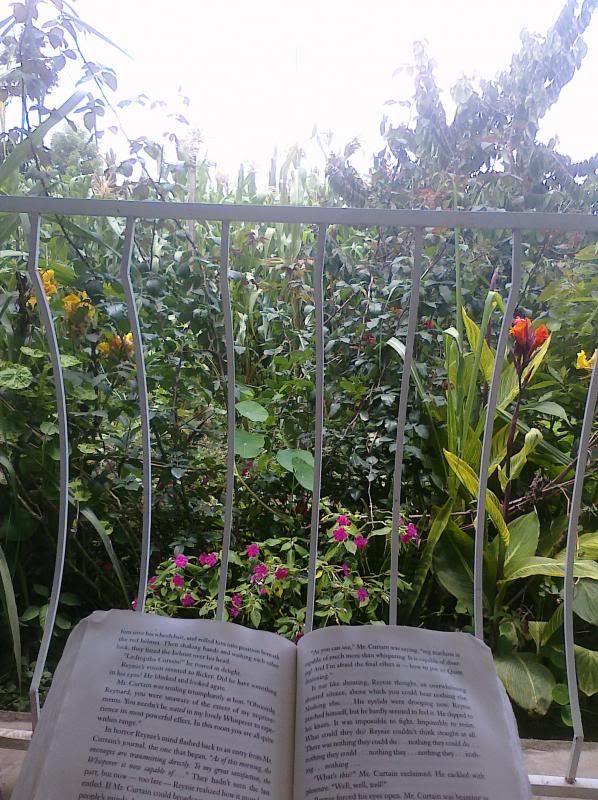
It's unusual for me to not have power for any long stretch of time.  As such, I've never really had to entertain myself when I can't do work and/or use my laptop for fun things like watching TV or computer games.  I puttered around a bit.  Rearranged some stuff, cleaned my house.  And I saw how beautiful it was outside.  When my site mate, Christina, COSed, she sold me some of her furniture.  Because I was out of the country when she flew home, I had my landlord let her in and bring the furniture.  It's nice because I didn't actually have to move anything myself.  Also, Christina's couch and matching arm chair that she left me are super comfy.  I'd been using the chair as a dumping ground for all my things when I get in the door.  My purse, jacket, grocery bags of toilet paper, and other odds and ends were piled in the seat.  I cleaned them all off, and took the arm chair out onto my porch with a book I was in the middle of reading (The Mysterious Benedict Society, for those of you who are interested).  I also brought out some dried mangos and some apple juice I'd bought at my ferenge suk to snack on while I read in the sun.

I wasn't the only one enjoying the sun that day.  Hossana is home to a particular breed of small lizard that I have yet to identify.  I've always wanted to snap a photo of one of these lizards, but the problem is they dart away so fast it's impossible.  And, unlike geckos, they mostly keep out of sight and don't come into my house, so I only see them when they're racing from point A to point B across my path.  But not today.  Probably because it's in the middle of rainy season, these lizards need all the heat they can get.  So there was one on my porch, just chilling in a patch of sunlight as he soaked in the rays.  He was enjoying it so much, he allowed me to get stupid close to him and snap a photo on my old Palm Pre Plus - a two-year-old now defunct Smart Phone that I use to listen to podcasts and reread old text messages.  My phone has no zoom on it, so you can imagine how close I had to get to get the image you see here.


But that wasn't all my lizard action today (boy does that sound weird out of context).  My friend zoomed off, as lizards here do, onto what I refer to as the "patio area" of my yard.  It's really the old concrete foundation of a shed that my landlord knocked down not long after I arrived here last year.  Now, he's erected some sort of lattice work above the concrete to support a growing grape vine.  Anyways, as I followed my little friend out onto the patio, I saw him meet up with another, smaller lizard.  I don't know if the lizards were mates or not, but they didn't seem particularly perturbed by each other.  I watched them dine on a line of ants that were marching across the patio before they both scattered in other directions.  I took a short video of these two on my old phone, too.


Above is a photo of the view of my garden from my perch on my porch as I read my book.  It was so enjoyable just sitting out there and reading that I finished my book and began a new one on my refurbished Nook.  (Side note: I'm a little concerned about B&N's product.  This is my third one under an extended warranty, and though the first two had two completely different problems, they have the fact that it was caused by factors beyond my control in common - glitches hidden somewhere in the factory-installed software that messed up the programming, and I had only put legitimately purchased B&N Nook books on there, so I can't be accused of giving it viruses or anything.  At any rate, I hope third time's the charm and my Nook Simple Touch lasts, but if it doesn't, I'm writing a strongly worded review about this useful but entirely buggy product).  The new book I'm reading now - and halfway through already thanks to the blackout - is Ender's Game, which, yes, I've already read, but that was ten years ago now, and with the movie coming out, I need to refresh my memory.

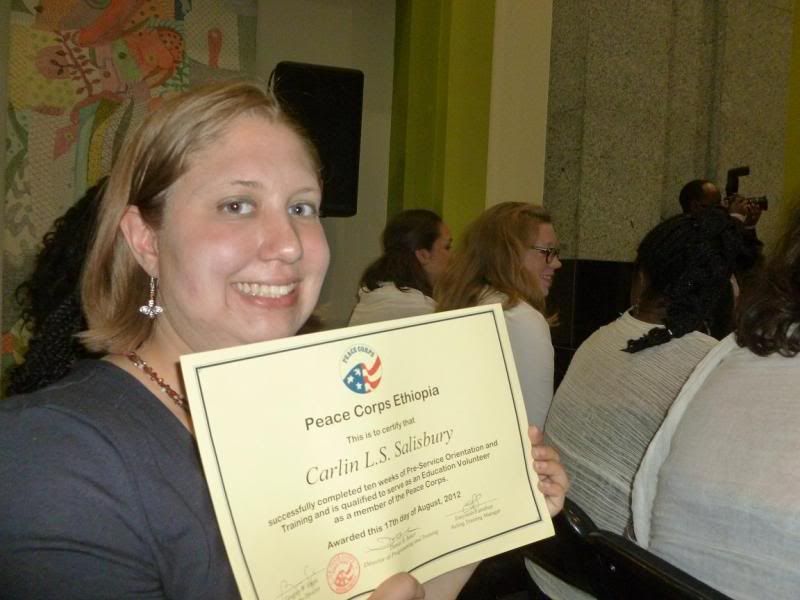
In short, yesterday was the perfect way to mark my Peace Corps-versary.  Yes, that's right. On August 17, 2012, I was officially sworn in as a Peace Corps Volunteer in Ethiopia.  So what better way to celebrate than by going with the flow of no power and spending the day reading on my porch, smelling the flowers, watching the wildlife, instead of cursing the gods and complaining about how I can't get work done or watch my stories?  I must be growing up.

Carlin, August 17, 2012, Addis Ababa
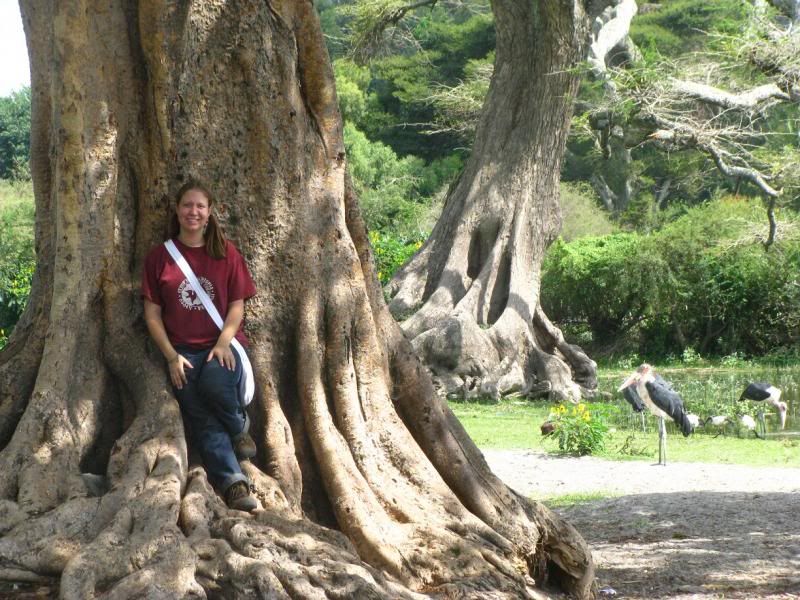
Carlin, August 10, 2013, Ziway
Look how far I've come.  And when I say that, what I really mean is, look how long my hair has gotten!

I've also been making soups from scratch.  It's easy and delicious, and filling if you add enough thickener, rice and/or noodles to it.  Every time, the soup tastes different, because I'm always adding to it, but it's always delicious.  It's perfect for the rainy days that this season brings, and nice to curl up with and eat while I read my book on my new couch, or maybe watch an episode of Community on my laptop (if there's power).  I've included the recipe, with common substitutions below, just in case any of my friends want to know what the new staple of my diet tastes like.  It's a variation on the egg drop soup of the PCV Ethiopia Cookbook.  Which, by the way, if you want a creative cookbook with fun recipes and explanations on how to easily make Ethiopian and American food, shoot me an email and I'll be happy to forward you the PDF.  But there are two version of the egg drop soup in the cookbook.  Mine sort of combines both the recipes.  Here it is.

Ingredients 

4 cups of broth or stock (chicken, beef, or vegetable - dealer's choice)
2-3 skinned and sliced carrots
2-3 small onions, diced (in America, just use one big whole onion)
1 clove of garlic
1 tsp Ginger powder, or grated ginger root
1 tbsp of honey
1/4 cup of cold water
1 spoonful of corn flour
2 eggs
Black Cajun Seasoning (to taste)
Curry powder (to taste)
OPTIONAL: Noodles or rice

Substitution note: If you don't have stock cubes for broth, you can use seasoning from Ramen packs.  Perfect, if you're also using Ramen noodles.

Put the broth on to boil.  While that's heating up, dice your onions and garlic and slice your carrots and add to the soup.  Add ginger and honey, and seasonings to taste.  Meanwhile, in a separate bowl, combine the 1/4 cold water with corn flour and mix thoroughly until it is a milky liquid.  In another bowl, beat your two eggs.  Bring broth to a boil.  Add noodles and boil with broth for as long as noodle packet advices (note: if adding Ramen noodles, only boil 2 minutes, but spaghetti is normally about 8 minutes).  If not adding noodles, just consider how well cooked you want the carrots to be, although I've boiled for 8 minutes with carrots and noodles and it seems to turn out OK.  Slowly add corn flour mixture.  Be careful, as the flour will settle so mix it again if it does.  Remove from heat.  Add beaten eggs and mix them into the soup.  Soup should change color and texture with the eggs.  Serve while piping hot.

So that's been my hearty and tasty meal of the month, and as mentioned, it's perfect for the weather here right now.  And with autumn right around the corner for you fine folks in the States, I'll bet it'll be great for those chilly nights.  I've been thinking of trying to explore and create a Hossana spin-off of the recipes in the cook book every month.  My goal is to include a new "Peace Corps Carlin" recipe in this blog each month, to give you guys a little "taste" (haha) of my life here.

Anyways, I hope you enjoy my personal version of the egg drop soup.  Don't let the onions get to you too much (I am terrible at chopping onions, and have to take frequent breaks, but they're so delicious in the soup!)

Signing off for now (photos - and maybe even video of the lizards - to come in an update later this week, so watch this space!)

Carlin

Thursday, August 8, 2013

Camp G-GLOW Sodo 2013 Now Completed!

As much as I would love to rehash all the awesomeness that occurred during the week of July 28th-August 3rd, I believe it would be much easier to show you.


The above video can also be found at our awesome Camp G-GLOW blog, where I am a one of three bloggers that keep the thing updated and looking pretty.  The other two working on the blog are Jackie, and Adi, our Ethiopian counterpart who occasionally does a post in Amharic for Ethiopian readers not too familiar with English.  You can find all the nitty gritty details of what we did at Camp G-GLOW at this convenient location, but first, another video!


(Because I know how much you all love videos).  This one above is actually a slideshow of OhnSoon's excellent photographic documentation of our week-long camp.  It's worth more photos than I could ever simply embed in this post.  That being said...


Oh, look!  It's me, with my campers, and fellow Yellow Team Leaders, Kat, Yeshi and Samantha (black shirts from left to right that are not me).

So as I said, you can get the details right here at our official blog, but where else but here will you get a more personal reaction of my experience at camp?  Being the official blogger is great, but I do have to keep things in perspective, talk about activities, be sure to remember which camper did which adorable thing, and which counselor led which activity, and make sure everyone's names get a mention.  Here, I can just talk about it, from my perspective, without worrying about all that.

So I'm going to lay all my cards on the table and be super honest: I did not want to do Camp G-GLOW this year.  Nope.  I didn't want the stress, and I was worried about bringing students that I had no personal relationship with to camp with me.  My site mate, Christina, is the one that works at the primary schools and she basically went through the camper selection process for me.  Though I had (enthusiastically) participated in Christina's mini Camp GLOW in Hossana, I was more wary about the one in Sodo.  The Hossana camp was easy to say yes to.  For one thing, no travel was involved, and at 6:00 the kids could go home and so could I.  On top of that, we didn't have to feed them as students just went home for lunch, too.  So all I needed to focus on was the actual camp things, like lessons, activities and management.  Sodo added a whole new barrel of fish.  It was bigger, involved travel with kids I didn't know (I hate traveling in this country) and you are on practically 24/7 and always have to be a role model.

Despite all that, I said yes.  I said yes primarily because Christina made me say yes.  She pointed out that, because she was COSing, she couldn't take the kids herself and I needed to take them or they wouldn't be able to attend.  If you want to get me to do anything, tell me I'm taking a once in a lifetime opportunity away from kids.  Gets me every time.  So I acquiesced and started my prep.

Prepping for Camp G-GLOW is probably the easiest thing I have ever done as a Peace Corps Volunteer.  I know for a fact that it was far more difficult for other PCVs, who took on bigger roles in the camp organization, especially Emily, our Camp Director, and Dan the logistics coordinator who actually lives in Sodo.  But thanks to these other wonderful and responsible people, my preparation was a breeze.  I had one lesson I really wanted to do - making All About Books - a genius notion (if I do say so myself) that combines American-style literacy education ala the Writer's Workshop Model with a fun and informal assessment of what students had learned at camp so far.  Students would write and illustrate a book about the topics we were learning about at camp to show what they had retained.  Boom, one lesson done.  And the second lesson on leadership was literally handed to me by Emily, and all I had to do was execute the lesson plan (with a few personal touches).  So that was easy.  Then there was camper selection.  Christina agreed to do it for me, because she knows all the kids and the teachers in the primary schools and picked four gobez (smart) campers for me to bring.  So that was easy, too.  Then I was concerned about transportation.  No need!  Because Hossana is a hub town close to Sodo, Emily managed to contract a bus for us that would pick us up right here, along with campers who met up here from Gunchire and Durame.  So that was super easy and required minimal effort on my part.

And then, there was camp proper.  Camp itself was not as easy.  It was a lot of hard work, and very high stress.  But it was rewarding, too.  I realized on my way down that it was OK that I didn't know my Hossana campers.  I'd get to know them, and I did, quite well.  All of us are meeting again next week for a mini reunion and shay/buna (tea/coffee) so I can give them all CDs of photos and the two videos I linked to earlier in this post.  Anyways, at camp, I got to know a lot of the campers, not just the ones from my site.  I grew very fond of my Yellow Team, even though they all had their flaws, too.  I hate to pick favorites - actually, not really - but my favorite was definitely Yohannes.  He was super gobez and adorable.  I was also fond of Mihret, a junior counselor I brought from Hossana who asked me for more responsibility when she realized she wasn't being utilized.  And when we gave her more responsibility as a helper in the classroom, she really stepped up.  I was super proud.  I also have a soft spot for Getachew, just because he was so little and had an angry face.  He was like my own little grumpy cat.  I remember, I was handing out rings of pride (rewards for good behavior, but everyone starts each day with one) in the morning and asked if someone didn't get one.  Getachew raised his hand, even though I could see one clearly around his nametag.  I said he already had one, and he said, "So?  Give me another," in this adorable grumpy-cat way.  I laughed, then he smiled, and we both laughed.  Was it a bit petulant and irreverent?  Perhaps.  But he's so little, it made me laugh.

I'm being kicked out of my usual cafe so that they can clean, so I'll just sum up here - Camp preparation was easy.  Camp itself was hard.  But worth it.  I'm glad I went, I had an exhausting, stressful, and fantastic time, and I know it's something that the campers who attended will carry with them for the rest of their lives.  How do I know this with such certainty?  When I first met my host brother, Foad, last year in Bekoji, the first thing he did was show me photos and the certificate he received for attending one of these Peace Corps Camps a few years previously.  He beamed from ear to ear, a teenager now applying to college (at the time), still proud of the certificate he earned for attending "an American-style summer camp."

So yes.  I have a feeling that, should these campers encounter Peace Corps Volunteers in the future, next year, in five years, or in ten years, they'll beam and react in much the same way as Foad - by wanting to enthuse about their experiences at Camp G-GLOW, Sodo, 2013.

Saturday, July 27, 2013

Camp G-GLOW in Sodo - Starting Tomorrow!

So one thing I haven't talked much about here in this blog is Camp GLOW, a Peace Corps World Wide initiative focused on health issues and gender equality.  GLOW stands for Girls Leading Our World, and the extra G you'll note in the title stands for Guys to make G-GLOW - Guys and Girls Leading Our World.

I won't blog much about it here, but I am the blogger on the official Camp G-GLOW Sodo blog, along with the lovely Jackie.  Together, the two of us will be keeping you posted on our exploits over the next week.  If you are so inclined, please follow our blog at this address and let us know you're reading!

Here, I would personally like to thank my friend Laura again, for being so kind as to allow us to use her house as an address to send camp supplies.  I would also like to thank any anonymous (and not so anonymous) camp supply donors.  You'll make this next week a memorable one for our campers, and that is priceless.  Thank you.


Friday, June 28, 2013

Peace Corps According to Ron Swanson

Those of you who follow my posts on Facebook may have noticed some quotes cropping up sporadically attributed to one Ron Swanson.  That's because I find his wisdom and guidance particularly helpful in my time as a PCV.  Though Ron was giving general life advice with his random maxims, or Swansonisms, I feel that many of them are specifically appropriate for the Peace Corps and I will proceed to explain why in this post.

For those of you who do not watch TV, or for some reason do watch TV but have never seen an episode of Parks and Recreation, Ron Swanson is the brilliant character on the show played by actor Nick Offerman and is depicted below:


Also, here, when he got a little drunk and decided to wear April's hat.


This pinnacle of masculinity and wisdom has said some of the most insightful gems on the whole show, and they have truly been an inspiration to me in the Peace Corps.  Allow me to explain why.

Ron Swanson Words of Wisdom #1: "Don't half-ass two things.  Whole-ass one thing."

When you first get to site, it's easy to become overwhelmed.  Even though you've been in country for three months already, everything is still new, and you've just moved to a new location in your host country where you're expected to stay and work for two years.  On top of that, you have to work on completing a needs assessment for that community so you can see what projects will be most helpful and most well-received by the community members.

This is where the trouble can start.  Talking with colleagues and community members can spark all sorts of ideas in your head, but the reality is that most of those projects will either never begin, or fail rather quickly.  The important thing to remember in Peace Corps is not to spread yourself too thin.  Focus on one project at a time, and work really hard on it.  Even if it ends up falling through, odds are you'll have accomplished something, even if it's just catching the attention of someone else who wants to work with you.  I know my friend who lives near me had an English club that none of her teachers attended, but the biology teacher came.  They ended up getting along really well, and she found a new ally in her community outside of the English teachers.

So Ron Swanson really has this one pegged.  When it comes to projects in your community, find something you really care about, and do that.  I may not have gotten much done in my first year here, but at least what I have completed has been successful.

Ron Swanson Words of Wisdom #2: "Give a man a fish, and you feed him for a day.  Don't teach a man to fish, and you feed yourself.  He's a grown man, fishing's not that hard."

This one may sound harsh, especially as the original "give a man a fish" quote is very inspirational and relevant to Peace Corps without alteration.  However, this new Ron Swansonized version captures something that I want to stress: Don't try too hard.  Like with the first Ron Swanson Words of Wisdom, if you try too hard, or stretch yourself too thin, you'll burn out and exhaust yourself.  Pick your battles.  Don't try to fix every problem in one fell swoop.

For example, one of my "projects" involves teaching a full-time class, as you know.  I could choose to micromanage my class and nitpick everything from spelling and grammar to always getting the right answers.  I could hover and always be there to make sure they're not cheating.  But I prefer to let them learn and grow on their own, at their own pace.  Also, I don't like to assume that just because we're doing something new that they are going to need extra assistance and hovering.  I also focus on one thing.  Last semester, it was content accuracy.  This semester, I've learned a bit more, and have decided to focus on effort and discouraging cheating.  As a result, students have been working harder, learning more, and the incidences of cheating in the class have declined.  Inadvertently, this has also caused a decrease in tardiness and an increase in students coming to my office for extra help.  So I guess when you focus on one thing and give students the opportunity to prove themselves, you may be pleasantly surprised.

After all, it could be they already knew how to fish, but everyone was too busy trying to teach them to figure that out.

Ron Swanson Words of Wisdom #3: "It's always a good idea to demonstrate to your coworkers that you are capable of withstanding a tremendous amount of pain."

It's hard living in a host community where you are constantly viewed as an outsider, especially for young female volunteers like myself.  Many things can work against you in the workforce that you have no control over, including your skin color (especially for non-white American volunteers), your gender, and your age.  If you are young, especially if you are significantly younger than your colleagues, some people may assume you are inexperienced and have nothing to offer.  If you are a non-white foreigner, some may not see you as being as impressive as if you were white.  And if you're a woman, some people (especially men) will not take you very seriously.  This can be frustrating, which is why I turn to this quote.

If every day you persevere and endure and come back, you are proving your seriousness, woman or not.  If you discuss your qualifications, including relevant trainings and degrees you have, then you are showing that no matter how old you are you know what you're talking about.  And if you refuse to take bad treatment from anyone, you are showing that your skin color doesn't determine your worth or your nationality (many non-white Americans here get accused of not being American).

In other words, show them you are capable of withstanding anything they have to throw at you.  If nothing else, at least a few individuals may learn that you're a force to be reckoned with.

Ron Swanson's Words of Wisdom #4: "One rage every three months is permitted. Try not to hurt anyone who doesn’t deserve it."

This one is essential for anyone who has gone a little crazy from being at site or even just in country for too long.  Being a Peace Corps Volunteer is a highly stressful experience.  From dealing with daily harassment to having all your projects fall through, some days you just want to break down and cry or lash out at something or someone.  As Ron says, it's OK to feel that way and go a little crazy sometimes, just remember who and where you are, and try and keep the collateral damage to a minimum.

Ron Swanson's Words of Wisdom #5: "Capitalism: God's way of determining who is smart and who is poor."

This one is more about accepting the state of things.  There is a lot of poverty in the world, regardless of where your site is, and often this is something that's a result of much bigger systemic inequalities that you are incapable of fixing on your own in two years (like capitalism, among others).  Just remember to do the little things you can at your schools or partner organizations and it's more than enough.

Ron Swanson's Words of Wisdom #6: "America: The only country that matters. If you want to experience other ‘cultures,’ use an atlas or a ham radio."

This is actually one of Ron's quotes that I have incorporated ironically, in that as a PCV it's impossible, or at the very least a very bad idea, to act like America is the only country that matters.  Still, the image of atlases and ham radios draws up memories of Peace Corps' roots, before there was such a thing as internet and cell phones to keep us in touch.  And if Ron Swanson ever did Peace Corps, you know he'd be the one to go off the grid - even from his own community.

Ron Swanson's Words of Wisdom #7: "I like saying 'no.' It lowers their enthusiasm."

Learn to say no.  I cannot stress this hard enough.  I got roped into teaching classes (which is fine) alone (less fine) and being responsible for grades (disaster) because I wanted something, anything to do that felt like it needed to be done.  I wanted to help out with a project initiated by a local so I said yes a lot, but what ended up happening was a lot of it never got done.  Again, this goes with RSWoW #1.  It's important, sometimes, to just say no, even when people are enthusiastic and excited.  Don't worry.  Have them work with you on your current project, and then see if you can get to their thing later if you're already overloaded.  Or if you don't know if it's a good idea, say that outright.  Don't beat around the bush or make excuses, or worse, say yes to be a positive people pleaser.  A bad idea won't get better just because you agreed to "help" with it.

Ron Swanson's Words of Wisdom #8: "Of all my coworkers, he is one of a small number of whom I do not actively root against…uh, there I go again gettin’ all sappy."

Just like in every other job, you're going to work with people with whom you do not get along, or find unprofessional, but this can be more difficult when you're also living a million miles from where you normally call home.  Because you're so out of your comfort zone, your colleagues could also be your biggest pool for potential friends.  So when you find a solid colleague, who's not just professional but a congenial person that you find yourself not actively rooting against, seize the opportunity.  Ask her to coffee to discuss family and work life, and how you are adjusting to your life here.  As for those coworkers you do find yourself actively rooting against, that's OK.  Just do it quietly.

Ron Swanson's Words of Wisdom #9: "Breakfast food can serve many purposes."

I eat eggs frequently, because they are easy for me to buy and easy to prepare.  This is perhaps very specific to me, but I take Ron Swanson's words to heart as I find every way possible to prepare eggs for a meal.  Fried eggs, scrambled eggs, deviled eggs, egg salad, I've done it all.  And when I'm not eating eggs, it's pancakes and nutella.  These are my two easy go-to meals if I really don't feel like cooking.  It's not like you could just hit the drive-thru or pick up some take away.  I think it's important to find one meal that you enjoy and that's easy to prepare so that when you're tired, you can always rely on that.  For me, it's breakfast food.  And now that I've gotten cinnamon from my COSing site mate, and plan to pick up some vanilla, I can make French toast too, and I look forward to it!

Ron Swanson's Words of Wisdom #10: "When I eat, it is the food that is scared."

I have always been an adventurous eater, and I will try everything once.  I've found that Peace Corps is an excellent place for an adventurous eater.  Despite warnings from our PCMO about certain cuisines here, I have at least sampled every one I have come across and have avoided most illnesses.  I would suggest the same to any other PCV.  Don't be afraid to try anything once.  In addition to that, when I go back to the West where delicious food is available everywhere I turn, I become a ravenous monster.  I expect such a transformation soon enough when I go back to the States in a few days.


So there you have it.  Ten succinct maxims that sum up my experiences in my first year as a PCV in Ethiopia.  I hope that by painting the tale through the words of Ron Swanson I can better get my point across, and I also hope that Ron's words can inspire other PCVs like me.  I hope you enjoyed this blog post as much as I enjoyed writing it.

So in conclusion, allow me to leave you with ten more wise words from Ron: "Honor: If you need it defined, you don't have it."

Friday, June 14, 2013

On The Homefront

I recently just passed my one year anniversary mark here in country on June 6th.  I've been wanting to write a blog post, or more of a public thank you note, to all of the people who have been so supportive of me back home.  This support comes in many different forms, but it all matters.

Keep in mind that if I don't mention you by name, it's not because I don't value the support you give me.  I have a lot of friends and family that have expressed positive thoughts and well-wishes about my service, and I appreciate each and every source of encouragement.  However, the people I name here have gone above and beyond in their support, which is why I wanted to honor them specifically.

It's easy to forget that a friend or loved one is going through a hard time.  And regardless of everything else that the Peace Corps is, it is certainly a hard time.  I have more bad days in Ethiopia than I ever had in Seattle - but the thing is, I also have more awesome days, too.  High risk, high reward, as they say, but it's the high risk that causes trouble with morale sometimes.  And it's easy to forget that a friend is in a high stress environment for two years, because, I mean, hey, you have your own lives, your own problems, your own stresses.

This is why I think it's super important to recognize the people who go out of their way to tell me that they know what I'm doing, they know it's hard, and they appreciate it and they support me.  There are a few people on this list, like my parents, who are an obvious given.  But there are some people on this list that may surprise you.  I know that they surprised me.

So let's start with the obvious: My parents.

Both of my parents at one time worked for the State Department, and my mother still does.  As a result of that, I spent the first eighteen years of my life growing up in seven other countries, and none of them was the United States.  When I first started applying to Peace Corps, I thought this would help me adjust, but then my father wisely pointed out that it wouldn't.  He explained that when I was overseas, I got to live in my little embassy bubble.  I got to see the high poverty and development problems from behind the glass in my ivory four-runner.  And he was absolutely right.  I remember bringing this up with my Country Director when he interviewed me before swear-in to see if I was ready for service.  A former ambassador himself, he sympathized, saying that even administratively, Peace Corps was way different from the foreign service.

Since coming to country, my mother has been a typical mother, always wanting to know how I'm doing and what's going on and what's Ethiopia like and am I making friends and all that other stuff.  And she Skypes me all the time and they even sent me a care package in the summer.  My dad is often with her when we talk on Skype, asking his questions and stuff, and even if he's not, I'm sure she tells him.

I have never spent a Christmas away from my parents before, not in twenty-five years of life.  Not even the fact that my family members often live in different countries on different continents can keep me away from them at Christmas.  When my mother was posted in Tunisia, and my father was still wrapping things up in DC, and I was up in Seattle, he flew both me and him all the way to Tunis so we could spend Christmas with my Mom, and then the next year, he flew both of them out from Tunis and me from Seattle down to Los Angeles to spend Christmas with my brother.  I don't know if it's as big a deal to them as it is to me, but spending Christmas with my parents matters a lot to me at this point in my life, and I was really nervous that this might actually be the first Christmas I have to spend without them.  But from the very beginning, my parents just acted like they expected to come, and again they bought me a plane ticket from Ethiopia to go spend the holidays with them in Belgium.  Not only this, but they opened their door and their home to a fellow PCV who couldn't go home for Christmas, and I know that he is still grateful for their hospitality.  What's more, my parents are going a step further for Christmas 2013 by allowing me to bring not one, not two, but three other guest PCVs, who must have heard how great the vacation was for my other friend and want to see what it's like.  And they did it with open hearts and not a hint of hesitation.

And if that weren't enough, my father decided that the best birthday present he could give me this year was flying down to Addis Ababa to see where I live for himself, and of course he brought all sorts of delicious goodies with him, including all the ingredients required to make my traditional birthday cake since I was twelve years old - dirt cake.  Oreos, cream cheese, vanilla budding, and I don't even know all of what else, but it was delicious.  So I took him on a tour of this beautiful country in which I serve.  Hawassa, Arba Minch, up through Hossana, and then back to Addis Ababa.  Afterwards, he commented that he understood a lot better how I live now, and that he finally realized the need (as opposed to want) for an external hard drive.

So this is what I believe is "above and beyond" as far as support goes.  And maybe some people think, "Well, yeah, sure, but your parents are expected to be supportive."  Well, yeah.  But consider this - I am one of seventy volunteers in my group who have been here for a year now, and I am only one of a handful who have had anyone, let alone a parent come visit me.  And everyone's parents are supportive, but I think that says a lot.

Next on the list: Layne

Layne herself will probably be surprised to see her name on this list.  She was a friend of mine I met when I was in high school in Cairo, and while we don't see each other much anymore (on account of we lived in different states, and now different countries) we talk rather frequently, and I attended her wedding almost two years ago now.  Wow, has it really been almost two years?  Congrats to Layne and her husband, Chris, on that.  Still, since moving to Ethiopia, I have noticed a marked increase in my communication with Layne.  She messages me all the time, Skypes me a lot, likes almost all of the photos and posts I make on Facebook about Ethiopia, and she was really supportive in my first ten weeks in country, arguable the most difficult ten weeks of my service as I readjusted.  Layne hasn't done anything like fly out on a plane to visit me, or even send me a care package (although she says she's putting one together).  Her support is much simpler, and that is that she frequently takes time out of her day to check in with me.  It's simple, and it doesn't sound like much, but it can really go a long way, especially when you're out at site on your own and a friendly message from an old friend can really mean a lot.

And then, there's Laura.

Laura is probably the only person out of all of my friends in Seattle who seems actively interested in what I am doing and continuously supportive.  We have chats on Facebook, and she always seems genuinely curious about my life and how I'm doing.  Meanwhile, she had to go and get herself pregnant and now I don't get to see that stick figure of hers swell into a balloon shape, at least not until this July.  She's due in July, too, so I hope I can still recognize her!  I was so sad I had to miss this big event in her and her husband's life.  Still, I comfort myself with the knowledge that at least I'll get to meet the little squirt when I come back for good in 2014.  Sure, the kid will be a year old by then, but that's not too bad, when you think about it.  Still, she's pregnant, such a big life adventure, and yet she still finds time to be interested in me and my crazy life.  That's pretty awesome.  Laura is also one of the people who seems most excited about seeing me when I visit this summer.  She has also been a doll, agreeing to accept all packages of supplies that we need for our summer camp.  In fact, she just told me today that she was beginning to get shipments in, and how that made her excited because it meant that I would be in Seattle soon.  It's sweet comments like that, that, like Layne's simple support, can really go a long way to making a PCV smile.

And last but not least, I'd like to recognize Tod and Linda.

Tod and Linda are very old friends of my parents, being old college chums of my mother way back in the day.  They are rather like my aunt and uncle, regardless of blood relation.  Tod was the one who even taught me how to drive.  They, along with two other old friends of my parents in Seattle, served as surrogate parents for me when I was living in Washington and my folks were off gallivanting all over the world.  Since I've been here, Tod and Linda win the contest for sending me the most stuff through the mail.  I will never forget the day when I arrived at the post office in November and there was not just one care package there waiting for me, but two humongous boxes full of American goodies and all for me.  I was so excited I went home and photographed everything to mark the occasion.  And being as this was really the only time I received care packages other than one that my parents sent, that alone earns them a spot on this list.  It is expensive to send care packages, and I appreciate all the time and effort (and money!) that goes into putting them together.  It's one reason why they are so rare for me, I believe.  So thanks so much, to this wonderful couple, who put so much effort into bringing a little piece of America to Ethiopia for me.

I go on vacation in two and a half weeks to Seattle.  I look forward to seeing all of my old friends and family in the area while I'm there.  And I do want to give a general thank you to all of you for the support you do manage to give.  As I said, I know you have your own busy and interesting lives, but I really do appreciate it when you drop me a line.  It gets lonely out here in the rural highlands.

Much love and gratitude,
Carlin